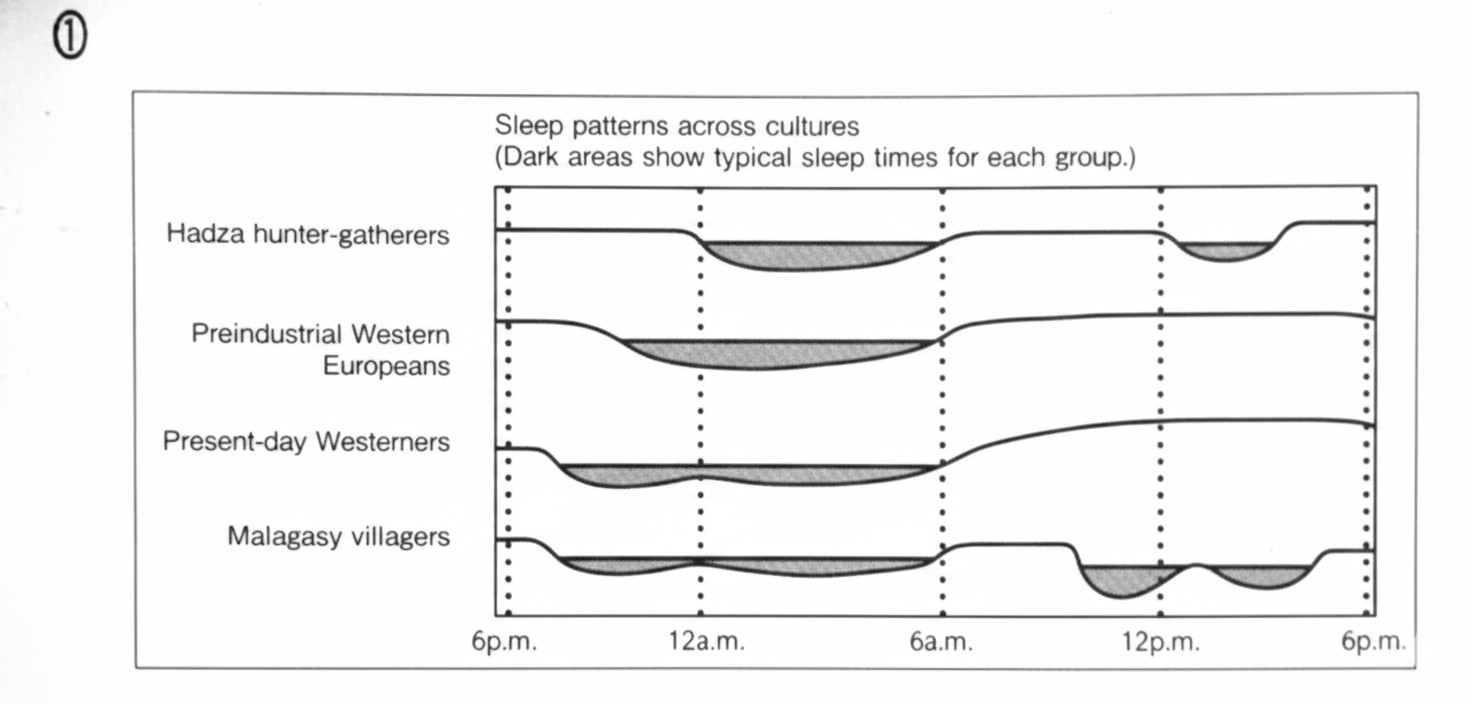
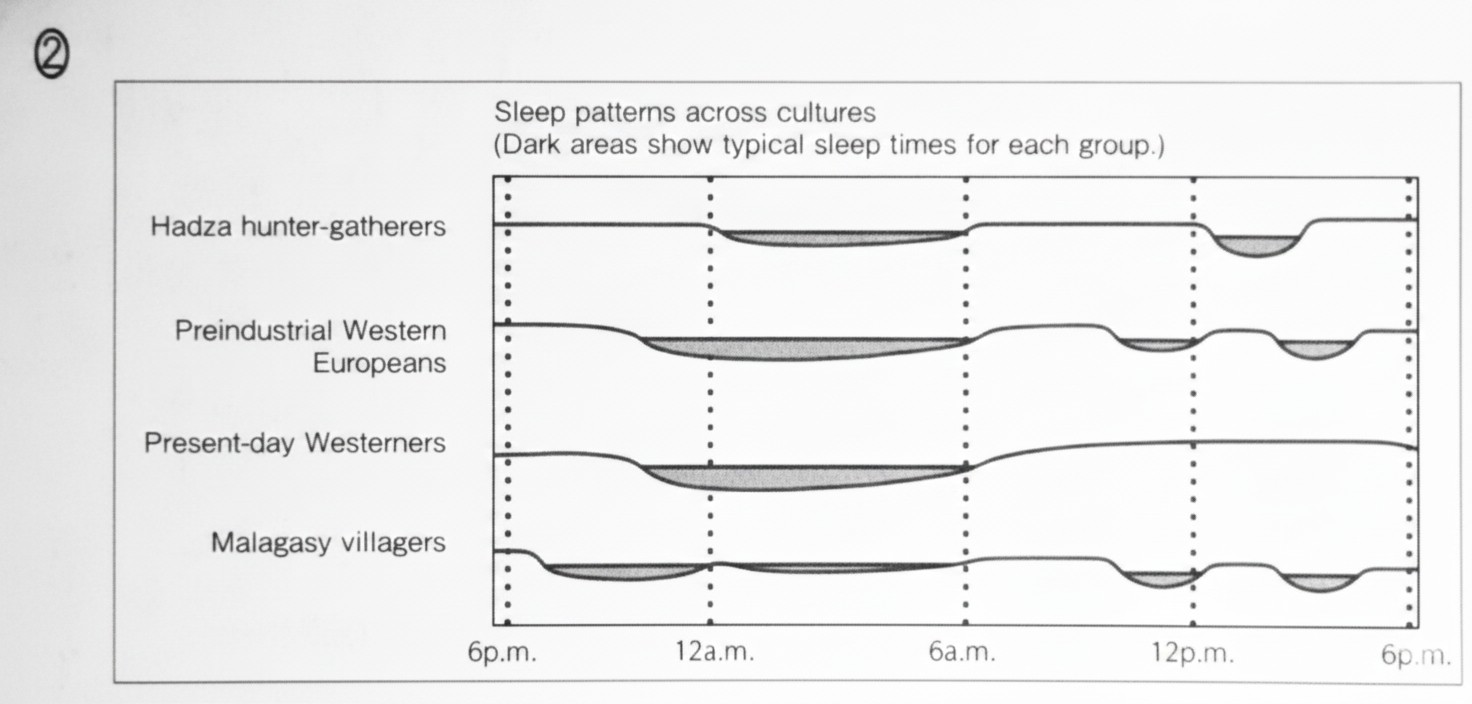
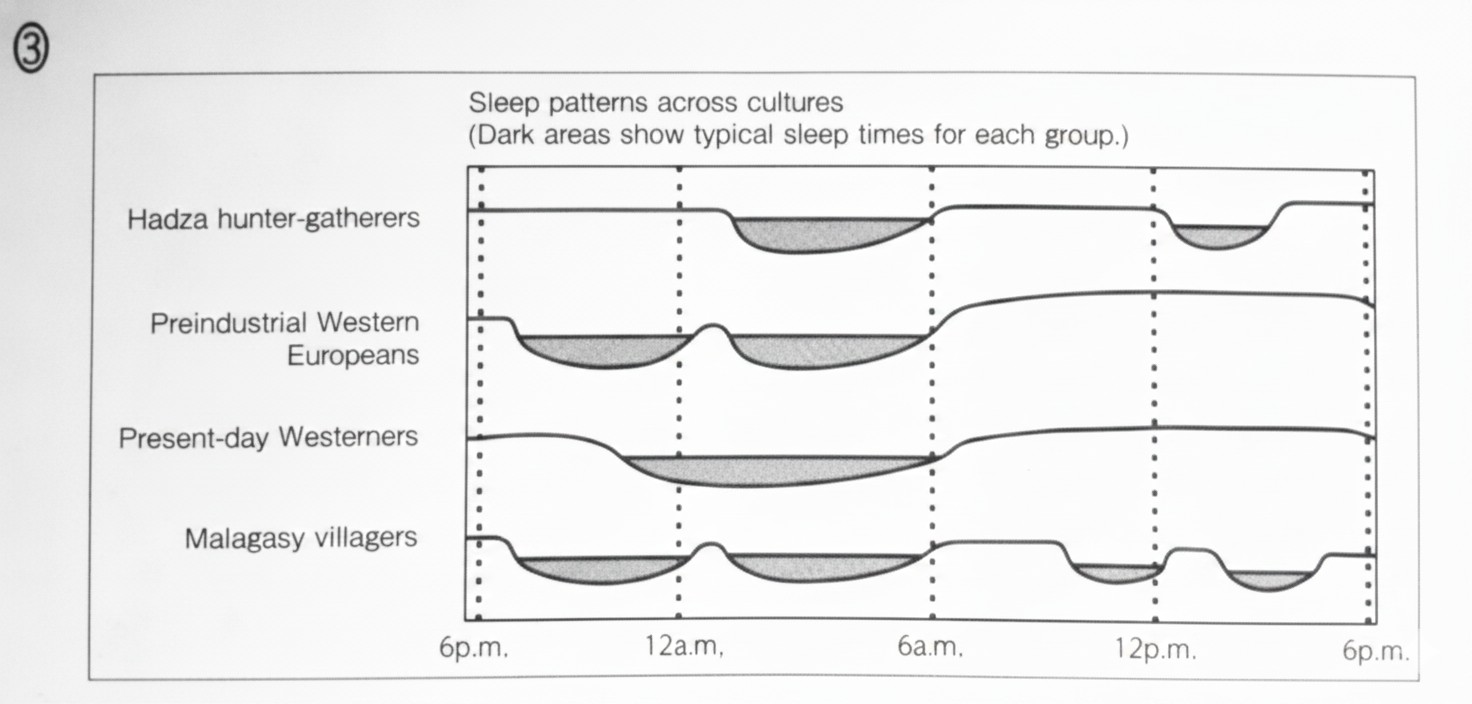
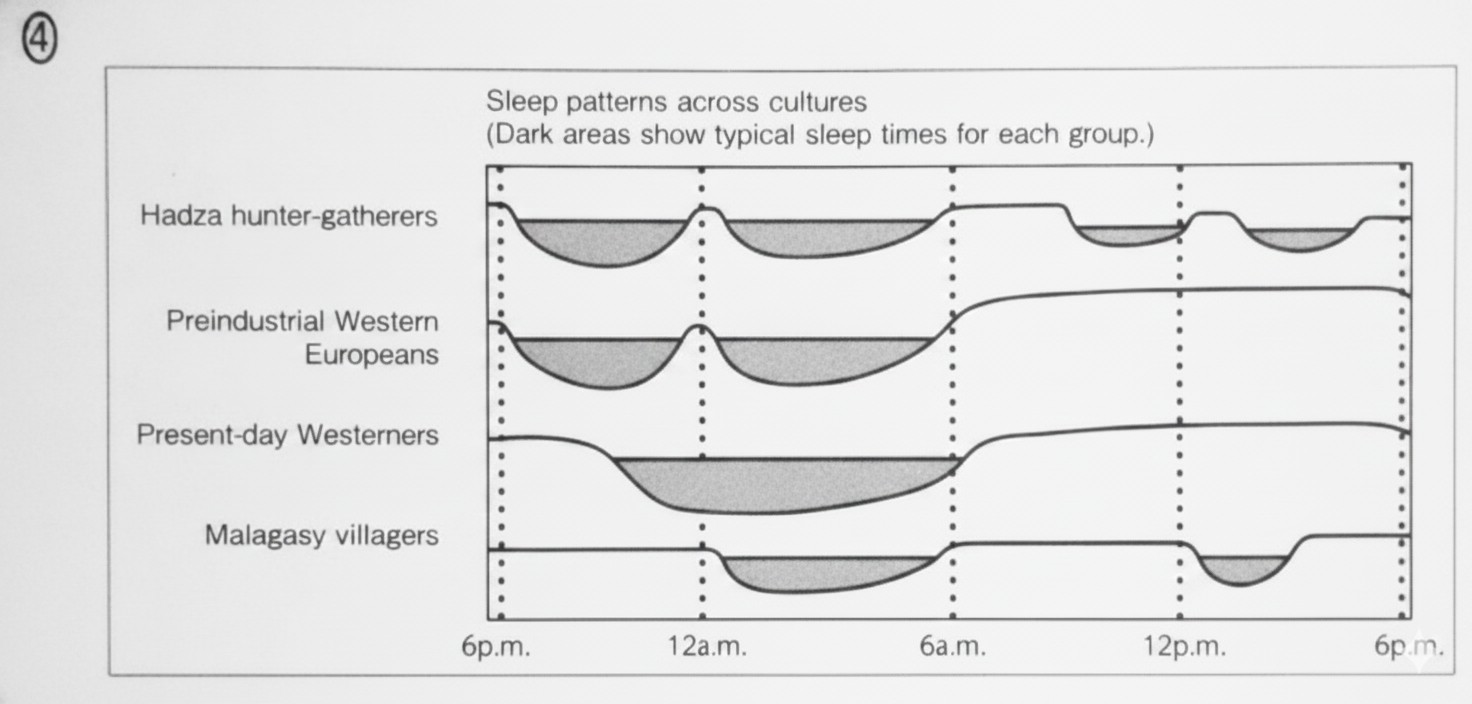
Sleep is important. In fact, recent data suggest that keeping a consistent sleep schedule might be just as important as getting the right amount of quality sleep. Compared with other primates, human evolution featured a shift toward sleeping more deeply over shorter time periods, providing more time for learning new skills and knowledge as cultures expanded. Humans also evolved an ability to revise sleep schedules based on daily work schedules and environmental factors.
Interestingly, not everyone in the world keeps to the same types of sleep schedules. In recent studies, scientists looked at the sleep patterns of four groups of people. The Hadza are hunter-gatherers that live in Tanzania, a nation in East Africa. The Malagasy live in villages on the large island nation of Madagascar, off Africa's lower East Coast. Both groups live without electricity. These people were compared to those living in the West (places like the United States and Europe) and also to Western Europeans who lived before the Industrial Revolution, some 200 to 500 years ago.
Contrary to conventional wisdom, people in societies without electricity do not always sleep more than those in industrial societies. This might be, in part, because non-Western hunter-gatherers and villagers, including the Malagasy and Hadza groups in the studies, spend more of their days in natural sunlight. Napping once or twice a day may also have some effect on them. Hunter-gatherers and villagers usually sleep in spaces with various family and group members and often wake up more frequently during the night than has been reported among Westerners.
Except for the naps, the Malagasy villagers' sleep pattern is very similar to that of preindustrial Western Europeans. In both cases, adults went to sleep a little after 6 p.m. Then they slept in two shifts. The first shift ended around midnight. Then, after remaining up for an hour or so, they would fall back to sleep again. By comparison, present-day Westerners such as adults working 9 to 5 jobs in the U.S. typically go to sleep just before midnight and get up around 6 a.m. And no mid-day naps for the majority of them.
Different sleep patterns in each of these groups highlight the flexibility of human sleep and also point to potential health dangers in the way Westerners today sleep. Hunter-gatherers and villagers are exposed to less blue light from indoor lighting and computer screens, which can confuse the body's internal clock. Blue-wave light emitted by smartphones and other digital devices can suppress the production of melatonin, a hormone helping people fall asleep, and delay sleep. People in modern societies can learn lessons from this research; that is, they should get more sunlight exposure during the day and less blue-wave light exposure after dark in order to get a good-quality sleep.